EMERGENCY AND SAFETY INFORMATION
This website contains information on what to do during an emergency at UW-Whitewater, how to prepare for an emergency, and safety-related best practices for the campus community.
To report an emergency, call 911.
For non-emergency reporting, contact the university Police Department at 262-472-4660, at menu, press 1.
Check the university emergency status
Communication channels and platforms
For emergency and safety communications, email is the university’s official communication channel, as every student, faculty and staff member has a uww.edu email account. Additionally, you can sign up for InformaCast mobile alerts and text messages by selecting the respective links below.



Types of alerts
- Emergency alerts: Reserved for timely emergency or very important messages, these incidents involve life-safety situations or major disruptions to university operations. UW-Whitewater emergency alerts are transmitted as emails, texts, and push notifications. These are our highest alerts — you should promptly pay close attention. During times of emergency or major changes in university operations, we activate a red bar at the top of the uww․edu homepage with “headline” messages, and post more detailed information on emergency.uww.edu. In addition, Cisco VoIP phones will broadcast life-safety messages.
- Clery notice or Timely Warning notice: These messages are sent via email to students, faculty and staff from UW-Whitewater Police and alert the community to crimes or other significant public safety conditions that we believe the campus needs to know about or that we are required by law to share. These typically convey valuable safety information.
- Other advisories: These communications provide timely information on non-emergency conditions (e.g., preparation for a pending storm, temporary building/street closures). They are sent by email. These typically convey information about campus operations that may have an impact on you.
Training and resources
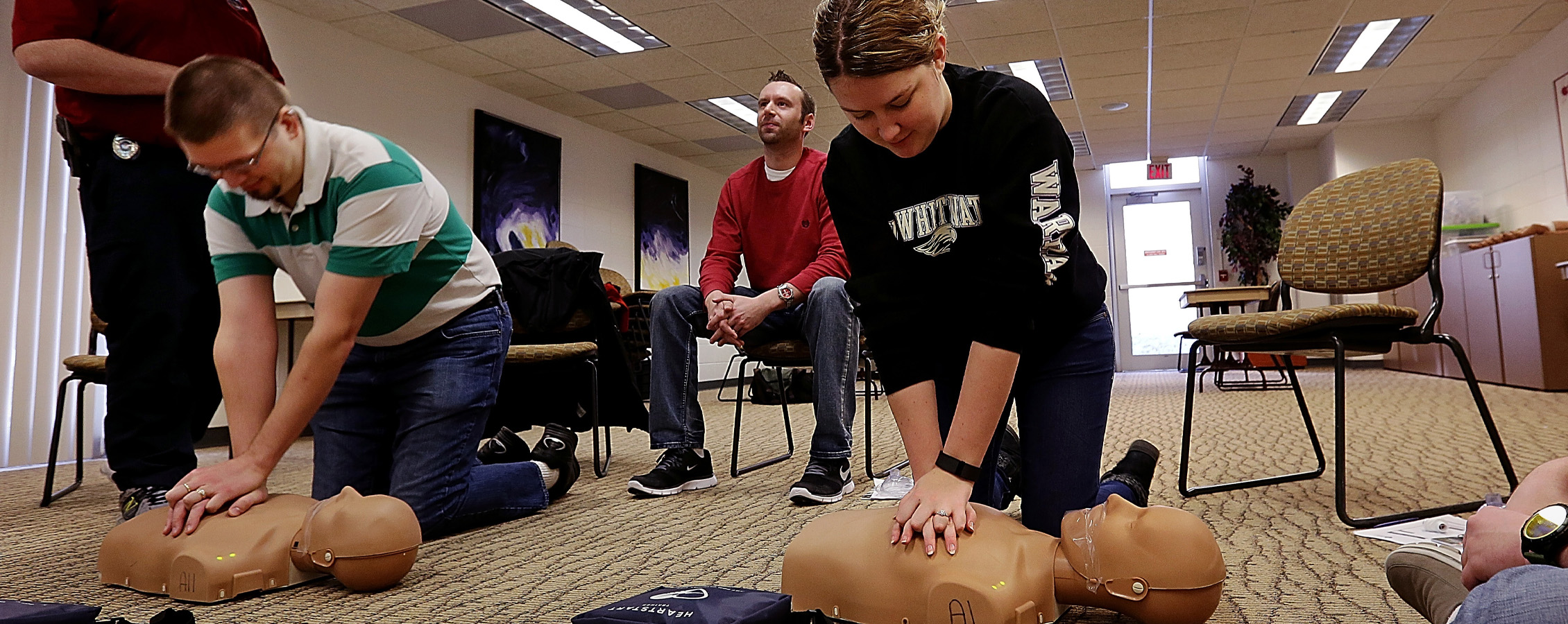
University police staff conduct numerous training programs for students and employees across a wide range of safety-related topics, such as theft prevention, online safety, drug and narcotics awareness, and active threat preparation. Police tailor programming to the specific needs of the requestor. Scheduled programs are advertised on posters, the Warhawk Weekly email newsletter, and on social media. Programming is conducted on an “as requested” basis and most classes are scheduled about 1‐2 times per semester.
Explore training programs
For scheduling, designing, or information on programming call the UW-Whitewater Police at 262‐472‐4660 or email police@uww.edu.
- Active Threat “Run. Hide. Fight.”
- Sexual Assault Awareness
- Alcohol Awareness
- Drug Awareness
- Traffic Safety (including OWI, seat belts)
- Basic Crime Prevention
- Spring Break and Travel Safety
- Working with the Police Department
- ID Theft and Computer Website Safety
- New Student Seminar
- Child Safety with the Children's Center
- UW Whitewater Police — Who are we
Emergency preparedness
University police coordinates emergency management planning for the University of Wisconsin-Whitewater. Faculty, staff and students — including departments and student organizations — are encouraged to contribute to the emergency operations plan by participating in training.
The university has a website devoted to emergency information that you may find useful in planning for such an occasion and to use as a resource should an emergency occur.
Purple Emergency Guidebooks are placed in all classrooms on campus as well as various locations and offices on campus. If you wish to request an emergency guidebook, please email police@uww.edu.
The nationally recognized best practice to follow in an active threat situation is “Run. Hide. Fight.” You will hear and see this message when there is a perceived or actual threat to life safety on campus.
Watch the video below to learn about this guidance and how it can save your life and others.
Crime prevention and safety resources
- Share your location with a trusted individual
- Have UWWPD non-emergency phone number in your phone 262-472-4660
- Be aware of your surroundings, and what is going on around you
- Keep your phone charged
- Lock your residence door when you are sleeping or away
- Know what to do in an emergency and have a plan
- Know your exits wherever you go
- If you see something… say something, don’t hesitate to call UWWPD at 262-472-4660
- Trust your intuition
- Take a self-defense course; contact UWWPD to set up a time
- Do not open an email from someone you do not know
- Limit who can see your posts and information on social media
- Keep your personal information secure
- Use strong passwords
- Don’t provide personal or banking information over the phone unless you called the trusted number yourself
- Don’t trust unsolicited emails to make “easy” money; if it sounds too good to be true, it probably is
- Lock your car doors and do not leave valuables in plain sight
- Lock your office or room doors when you leave
- Keep personal documents at home or in a secure location
- Keep a log of serial numbers for all your valuable items
- Do not leave your items unattended
Keeping your property safe on campus is important to us. During the previous academic year, nearly 50% of all thefts reported on campus involved unsecured bicycles and scooters. Many of these thefts are crimes of opportunity, and taking a few seconds to properly secure your bike or scooter can make a significant difference.
Students who bring a bicycle or scooter to campus are encouraged to:
- Use a lock every time. Purchase a quality lock and secure your bike or scooter whenever you leave it unattended—even for a short time.
- Register it for free. UW-Whitewater Police offers free bicycle and scooter registration. Registration provides identifying information that can help us return property to its owner if it is lost, stolen, or recovered.
- Know your property. Keep a record of the make, model, color, and serial number, and consider taking a few photos for your records.
- Report suspicious activity. If you see something that doesn't look right around campus bike racks or scooter parking areas, please contact UW-Whitewater Police.
How we help protect student property and reduce theft across campus
UW-Whitewater Police personnel will periodically check bike racks and other areas around campus for unsecured bicycles and scooters. When we find an unsecured bike or scooter, we will secure it with a UW-Whitewater Police Department lock to help prevent theft. We will leave information with the bike or scooter explaining how to contact the department.
The owner can then contact UW-Whitewater Police, and we will remove the department lock so they can retrieve their property.
This initiative is intended to be educational and preventative, not punitive. Our goal is to help students develop the habit of securing their property before someone else takes advantage of the opportunity.
Let’s work together to reduce theft and keep our campus community — and your property — safe.
The UW-Whitewater Police Department will provide a walking escort to any members of the university community upon request. Call 262-472-4660.
This service is prioritized amongst other calls for service at any given time. These walks may be conducted by a Campus Service Officer, or a Police Officer, depending upon availability and staffing levels.
The response time for this request may be up to fifteen (15) minutes, or longer if our officers are dealing with an emergency situation. If you are requesting a CSO for an escort at night, it is best to wait for them in a public, well-lit area. Please plan your request for this service accordingly. University Police staff will make every effort to accommodate your request; however, there may be times when this service may be delayed because of other duties. During these instances, we ask for your patience and understanding.
Note: This service is meant to be used as a courtesy and should not be used for ongoing occurrences. If students know ahead that they will have to stay late on campus, please arrange to have someone who can come pick them up or walk them to their vehicle.
Possession of dangerous weapons in University buildings, on the worksite, and in University vehicles, is prohibited (UWS 18.10(3)). A dangerous weapon shall include guns, knives, explosives, or any other device determined by the University, which in the manner used or intended is capable of producing death, harm to person or property, or bodily injury. Violation of this policy shall make the offender subject to appropriate disciplinary or legal action. The UW- Whitewater Police Department provides free weapon locker storage for individuals on campus. Please contact us any time regarding weapon storage.
AEDs and opioid overdose kits (Narcan)
In the event that an automated external defibrillator or an opioid overdose kit is needed, the university has these life-saving resources available throughout the Whitewater and Rock County campuses.
Alumni Center – lower level
Ambrose Health Center – room 1017A
Andersen Hall – HelpDesk, room 200
Arey/Fricker Hall – first floor link
Benson Hall – 1st floor lobby
Bookstore – lower-level lobby
Bigelow Hall – 1st floor lobby
Center of the Arts – lower-level room 32
Center of the Arts – 1st floor atrium elevator
Center of the Arts – room 2052
Clem Hall – 1st floor lobby
Community Engagement Center – room 105
Drumlin Hall – 2nd floor stairs
Esker Hall – 2nd floor lobby
Fischer Hall – 1st floor lobby
General Services – stores
General Services – room 118
Goodhue Hall – lower-level outside of room 20
Goodhue Hall – 2nd floor outside of room 213
Heating Plant – washroom
Heide Hall – 3rd floor elevator
Heide Hall – 1st floor elevator
Hyer Hall – room 330
Hyland Hall – room 1303
Knilans Hall – 1st floor lobby
Laurentide Hall – 1st floor elevator
Laurentide Hall – 3rd floor elevator
Lee Hall – 1st floor lobby
Mary Poppe Chrisman Success Center – lower level elevator
McCutchan Hall – 3rd floor elevator
McGraw Hall – entrance #2
Police – squad med bag 42, 44, 46, 48, 49, parking van
Police – west RHO office
Police – east RHO office
Police – Rock County office WC03
Pulliam Hall – 1st floor lobby
Rock County – Allen Hall 1st floor hallway outside library
Rock County – Andrews Hall lower level near room 001
Rock County – Hyatt-Smith Hall first floor hallway near rooms 103-106
Rock County – Wells Cultural Center lower level near gym
Roseman Hall – room 1031
Roseman Hall – room 2015
Student Athletic Complex – lower-level elevator
Tutt Hall – 1st floor lobby
University Center – 1st floor elevator
Upham Hall – room 140
Wellers Hall – 1st floor lobby
Wells Hall – 1st floor lobby
Williams Center – room 100
Williams Center – gym #4 hall
Williams Center – pool hall
Williams Center – 2nd floor lobby
Winther Hall – 2nd floor lobby
Young Auditorium – dance studio hallway
Ambrose Health Center – room 1001
Andersen Hall – HelpDesk, room 200
Arey/Fricker Hall – first floor link
Benson Hall – 1st floor lobby
Bigelow Hall – 1st floor lobby
Clem Hall – 1st floor lobby
Community Engagement Center – room 105
Drumlin Hall – 2nd floor stairs
Esker Hall – 2nd floor lobby
Fischer Hall – 1st floor lobby
Goodhue Hall – main building entrance lobby
Knilans Hall – 1st floor lobby
Lee Hall – 1st floor lobby
Ma’iingan Hall – 1st floor, across from student mailboxes
Pulliam Hall – 1st floor lobby
Rock County – Allen Hall 1st floor hallway outside library
Tutt Hall – 1st floor lobby
University Center – 1st floor elevator
Wellers Hall – 1st floor lobby
Wells Hall – 1st floor lobby
Williams Center – room 100